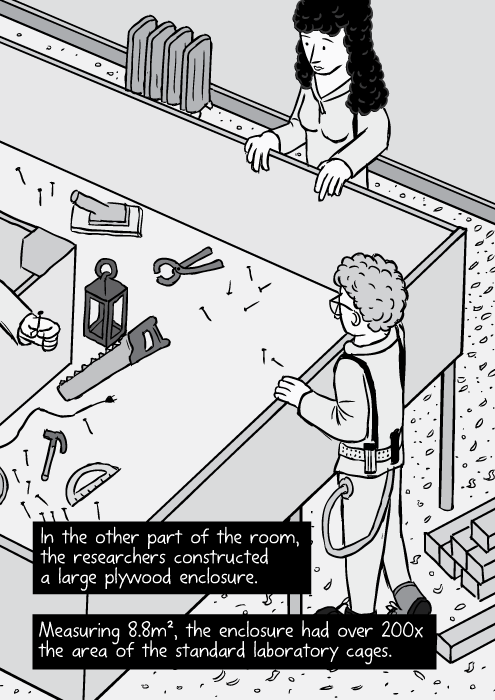
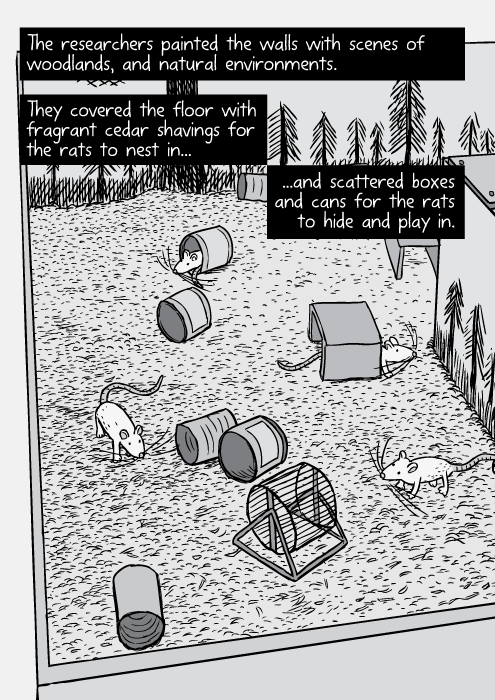
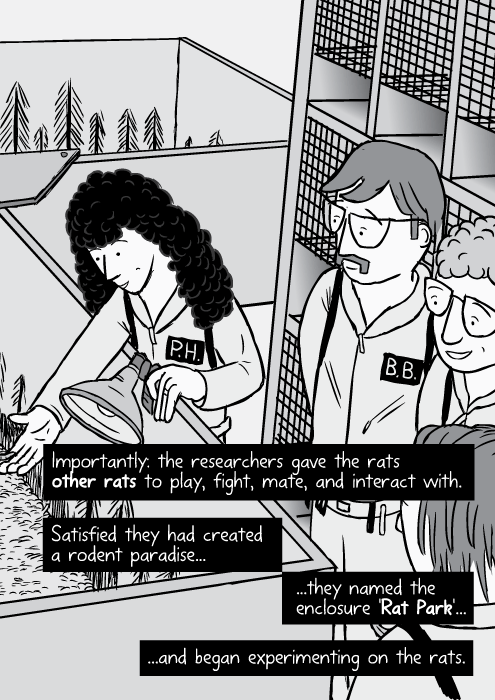
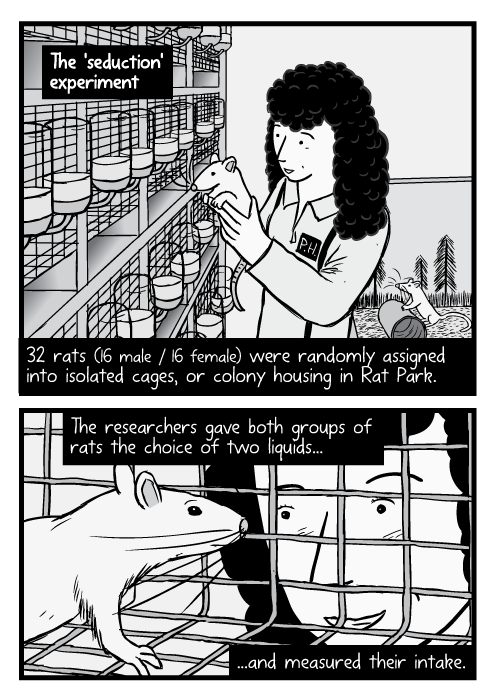
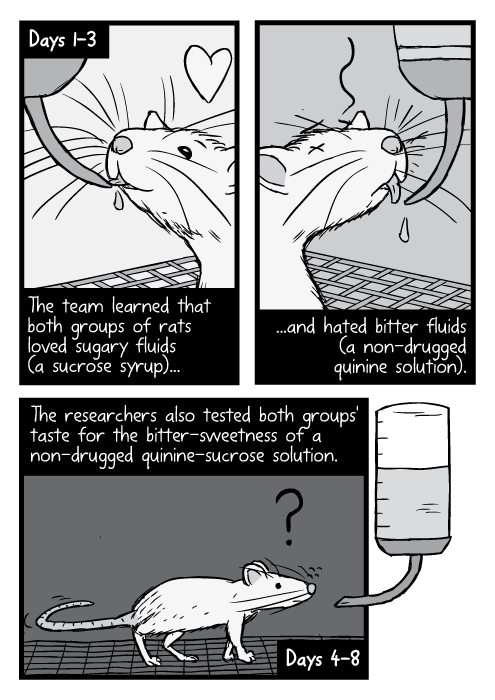
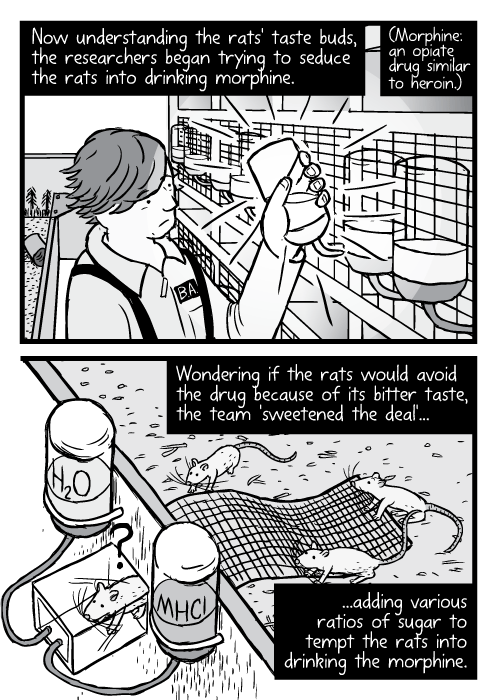
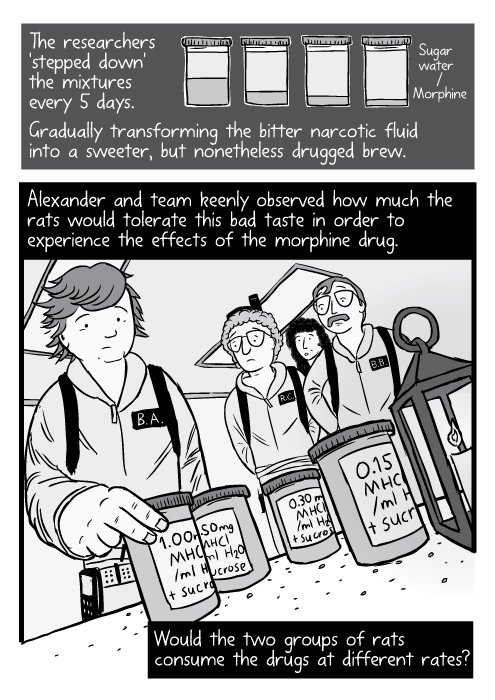
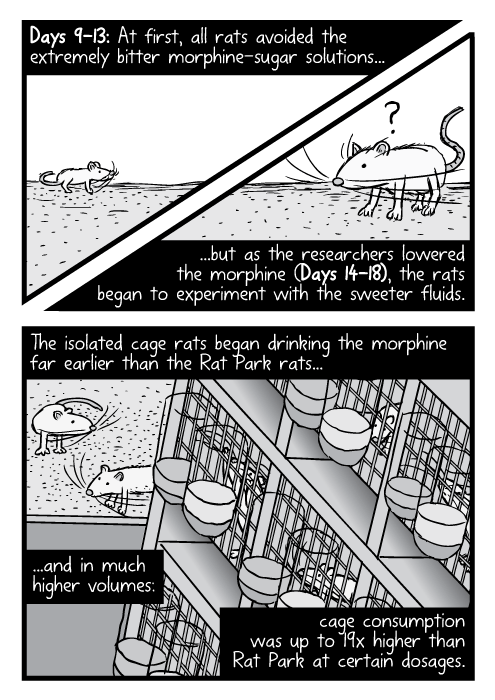
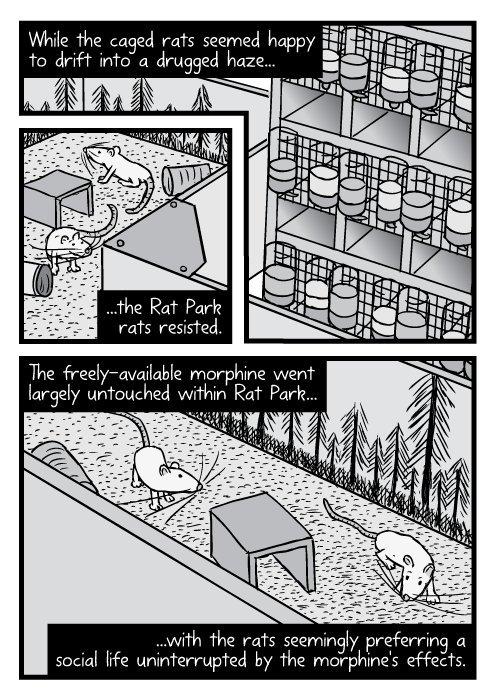
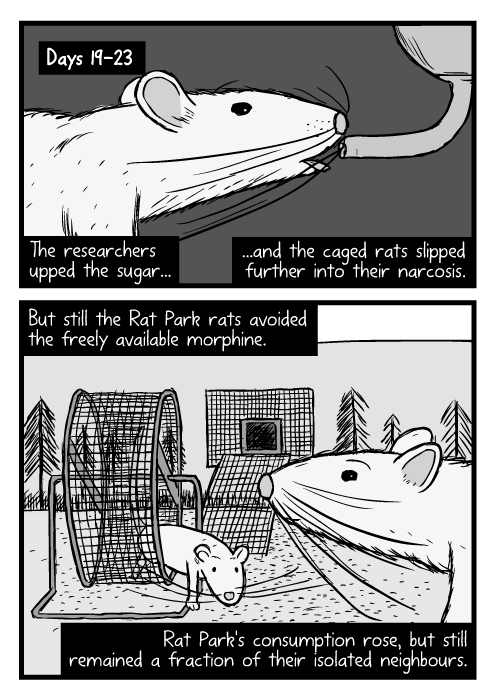
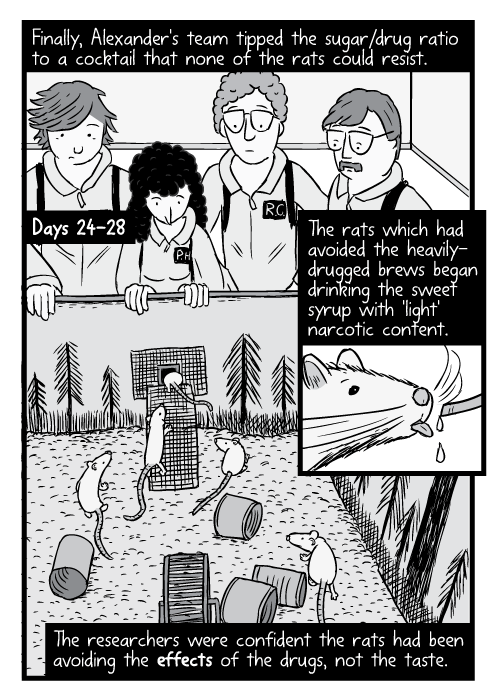
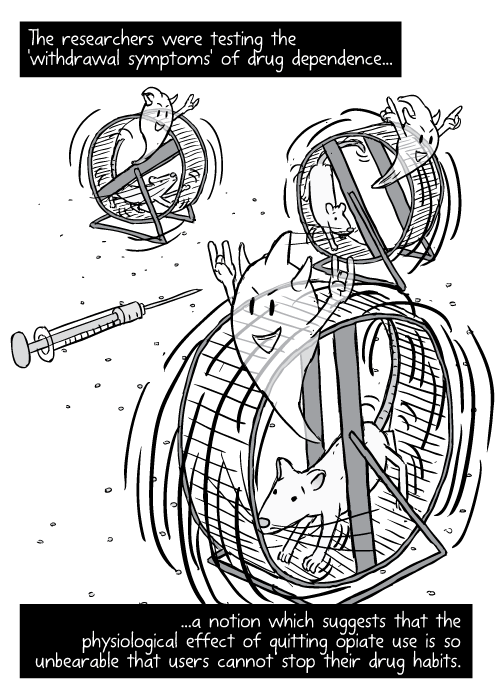
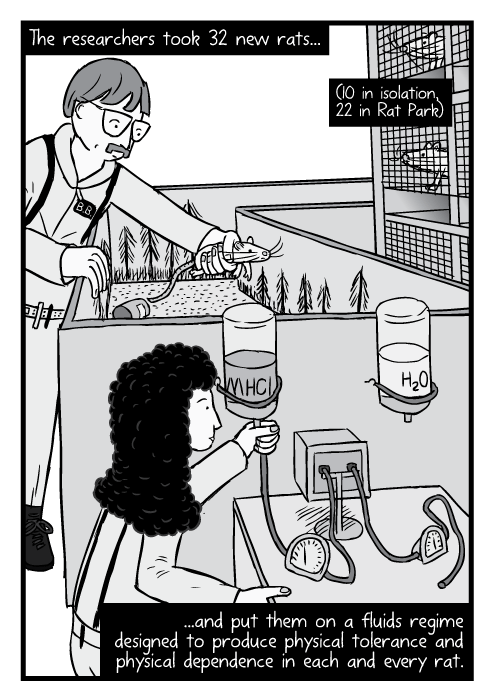
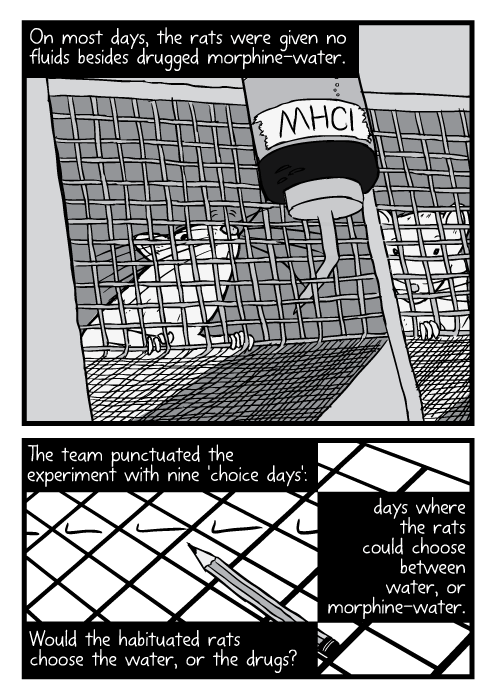
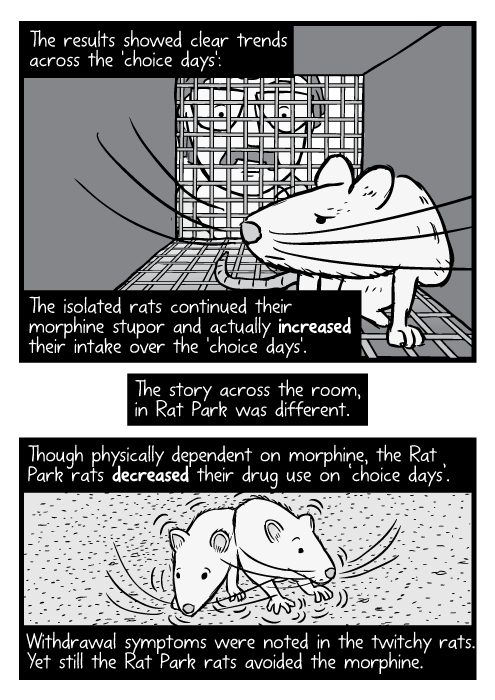
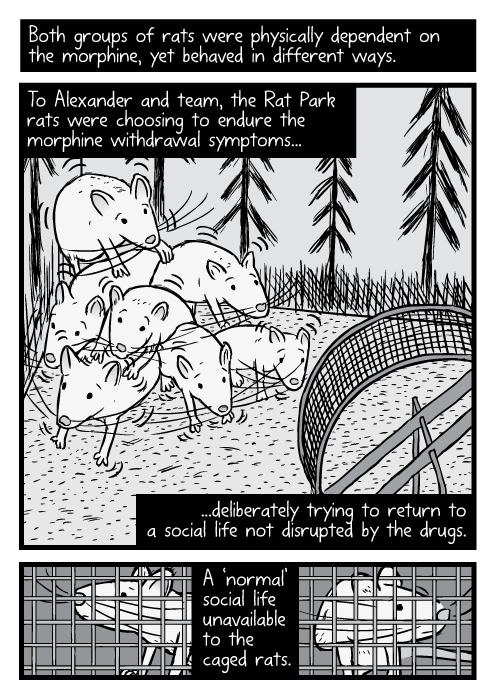
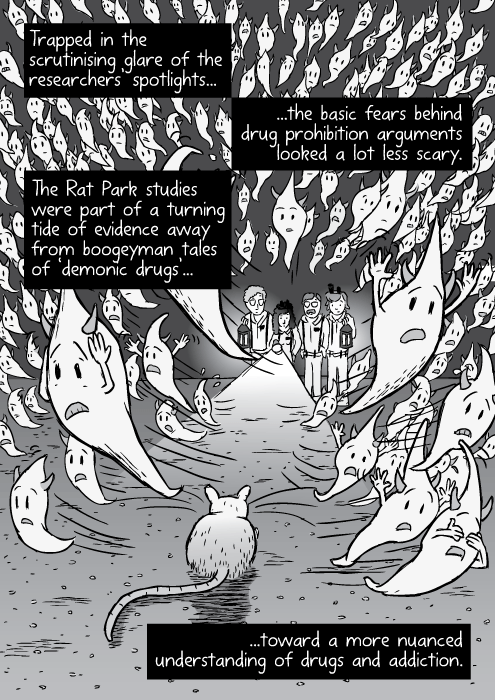
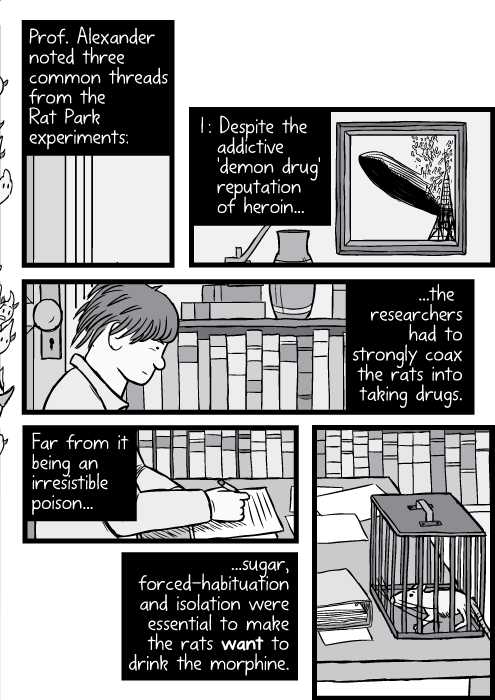
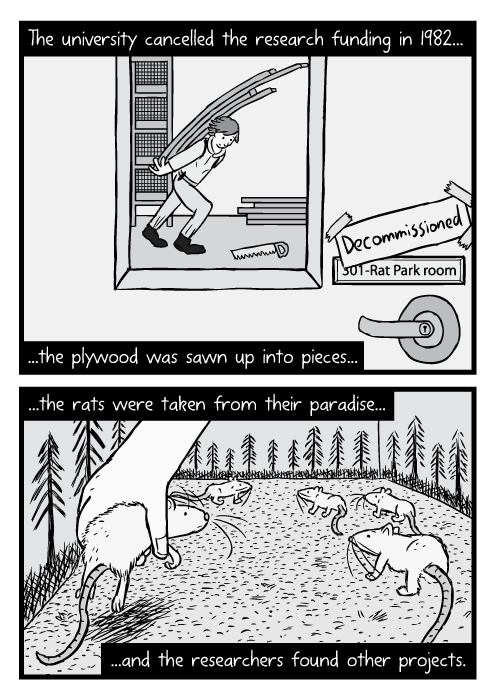
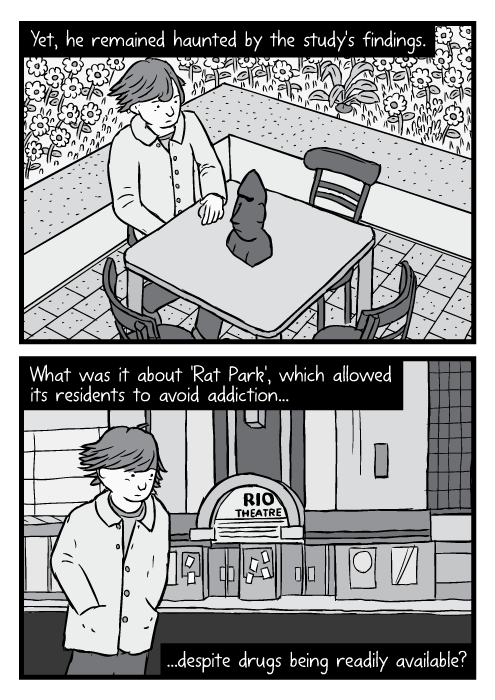
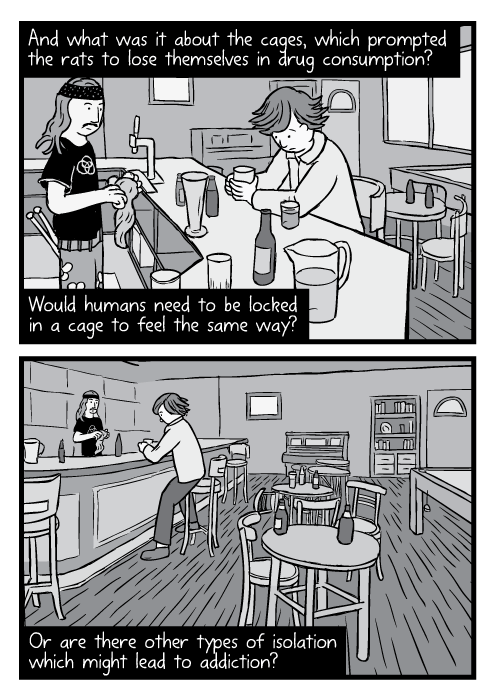
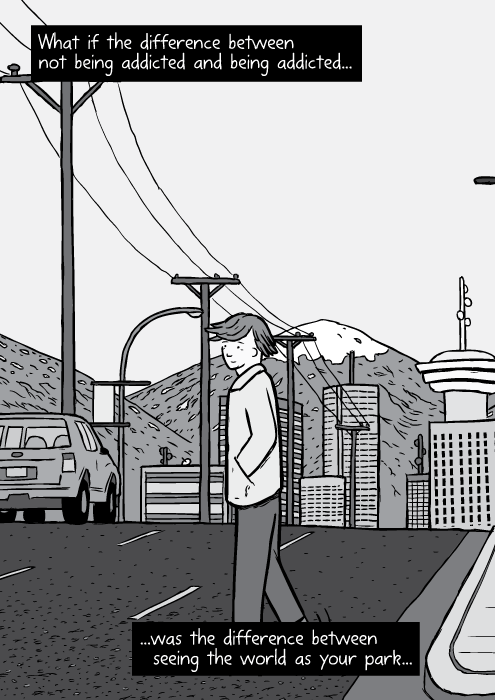
What I found absolutely impressive and stunning about this comic is the way the artist explained the identification and elimination of the confounding factors in the Rat Park study. This is one of the hardest parts of experiments to explain to the public, and I think it was just brilliantly done.
One of Chladni’s best-known achievements was inventing a technique to show the various modes of vibration of a rigid surface. First published in 1787 in his book Entdeckungen über die Theorie des Klanges, the technique consists of drawing a bow over a (circular, square, or rectangular) plate or membrane whose surface is lightly covered with sand. When stroked, a given plate will resonate at one of its natural frequencies. The sand bounces about on the plate until settling at nodal points (areas of zero movement) thereby producing intricate patterns. These patterns are now called Chladni figures.
Die Akustic, 1802
Nodal lines of vibrating circular or polygonal plates, acording to Chladni and Savart. The breakthrough work acquired a status of foundational work of a new scientific field and earned him a title of “father of acoustics”. It was the first systematic description of the vibrations of elastic bodies.
Let me preface by saying that I am assuming 3.5 edition D&D rules where there are five different types of breath weapon: fire, cold, electric, acid and sonic.
Sonic: Exaggerated echolocation mechanism with an ultrasound frequency. They may have a structural adaptation in their jaw, or it’s possible they sort of croak like a frog.
Cold, Fire, Electric and Acid: All of these ‘breath weapons’ could actually be dispersed in the form of droplets that then react in air. This means the dragonborn basically has to spit or spray a line/cone of fluid, and if little cobras can do that, it’s not unreasonable. Simultaneously some form of energy is conducted along that fluid, giving the appearance of breathing fire/cold/lightning instead of spitting dangerously.
The acid is the most obvious one. Lots of organisms produce biological acids that would be suitable.
Fire could be produced by spraying pyrophoric liquids. Diphosphane seems like a good contender, but results in this type of dragonborn needing to chow down on lots of bones if they use their breath weapon frequently. They would need to be stored in a gland, like a salivary gland, with an oily base and would make cutting the face of these creatures highly hazardous.
Cold may be generated by spraying endothermic fluid. Basically makes your dragonborn one big fire extinguisher.
Electricity is generated often enough in nature by organisms with bioelectrogenesis, like the electric eel and certain rays. Ramp up the voltage and provide a sprayed mist of highly conductive fluid droplets (some sort of salt solution) and it’s not unreasonable to hope the electrical charge crosses a dense enough droplet spray. These are mechanisms that exist in nature, just coupled together and highly exaggerated. I imagine they probably have the spitting-glands somewhere in the back of the throat or top of the neck, with the current generating organ in the nasal sinus and roof of the mouth.
One of the biggest steps of any mission starts right here on
Earth at a computer desk – NASA runs on software, period. Rovers can’t move,
spacecraft can’t fly, even rockets can’t blast off without the software codes
that run them all.
We’ve compiled hundreds of these powerful codes into
one location at software.nasa.gov. And guess what? You can start downloading
them right now for free! Here are just a few you can use:
TetrUSS has been used extensively for space launch vehicle
analysis and design, like on the Space Launch System, which is planned to take
humans to Mars.
You really could say it’s helping us to “blast off.” Outside
of NASA, this software has been used to analyze Mars planetary entry vehicles,
ballistics and even high-altitude sky diver aerodynamics. Basically if
anything has moved through any planetary atmosphere, this software has played a
role.
2. KNIFE (part of the FUN3D software and released as a package)
The name may be a bit intimidating, but with good reason –
KNIFE packs a powerful punch.
It was created to help us learn more about the
sonic booms that resonate when planes break the sound barrier, but it has also
helped develop green energy sources such as wind turbines and techniques to
minimize drag for long-haul trucking. Maybe we should re-name this versatile
and handy code, “Swiss Army KNIFE?”
3. Cart3D (Automated Triangle Geometry Processing for Surface Modeling and Cartesian Grid Generation)
If software codes went to high school, Cart3D would be Prom
Queen. This software is so popular, it is being used in almost every mission area here at NASA.
Engineers and scientists are currently using it to model
everything from advanced drones to quieter supersonic aircraft.
4. FACET (Future Air Traffic Management Concepts Evaluation Tool)
Frequent flyers: this may be your favorite code without even
knowing it. FACET was developed to evaluate futuristic concepts in air traffic
management, and it has served as a testbed for assessing today’s regular
operations.
To sum it up, this software code helps airports keep planes
organized in the air and on the ground.
5.GIPSY-OASIS
GIPSY-OASIS is part of the GPS system to end all GPS systems. It’s so accurate, John Deere used it to help create self-driving tractors.
How? John Deere already had a navigation system in the works, but it
could only be used in certain parts of the world.
Our ground stations are all
across the globe, and our software ensures accuracy down to a few inches. And
so, a new breed of tractor was born! Did
we mention this software is free?
These are just a few examples of the software NASA has
available for free public and consumer use. To browse the catalog online, check
out software.nasa.gov.
A sandfall! This is amazing. What might be going on is when it rains in the desert the water isn’t absorbed quickly and mixes with the top layer of wet sand which can form moving sand rivers and waterfalls. (Source)
You can’t escape eating (or gardening!) your vegetables, even if you’re in space. On Aug. 10, astronauts on the International Space Station sampled their first space grown salad. This freshly harvest red romaine lettuce was grown in the “Veggie” plant growth chamber that is designed to make gardens flourish in weightlessness.
In a weightless environment, there is no up and down, so roots grow in all directions. Water and soil, the materials used to anchor these plants and allow for root growth tend to float away.
How Do We Grow Plants in Space?
1. Plant Pillows
The Veggie chamber helps solve the problems of a weightless environment by using ‘plant pillows’, sounds comfy right? These pillows are bags filled with material for growing plants in space.
2. Wicks
Wicks are implanted into the bags and are used to draw water from inside the pillow to the plant.
These wicks also provide a place to glue the seeds. It’s important to orient the seeds so roots will grow ‘down’, and shoots that emerge will push out of the bag.
3. LED Lights
LED lights are used for photosynthesis and give the shoots a sense of direction so they keep growing upward. The walls of the Veggie chamber can expand to make room for the plant as it grows.
The purple/pinkish hue surrounding the plants in Veggie is the result of a combination of the red and blue lights, which is what the plants need to grow. Green LEDS were added so the plants look like edible food rather than weird purple plants.
Why are we growing plants in space?
When astronauts travel on deep space missions, like Mars, they will need to be self-sufficient for long periods of time. Having the ability to grow their own food is a big step in that direction. There is also a desire to grow flowering vegetables in space, which is why we are currently tending to zinnia flowers on orbit. Growing these flowering plants will help us understand longer duration growing plants that have to flower in space, such as tomatoes.
What’s Next? The next SpaceX delivery will include seeds for a small cabbage and additional red romaine lettuce. Upcoming experiments will use various ratios of red and blue lights and different fertilizers in attempts to improve crop yield, nutrition and flavor. The findings from these experiments can be utilized both on Earth and in space.
In addition to the nutrition benefits of growing vegetables in space, the psychological benefits are also significant. Having living plants can help with stress and increase the crews’ enjoyment. It provides the sights, smells and tastes of Earth.
To learn more about gardening in space, watch ScienceCast HERE.
Jan Stel (Purmerend, the Netherlands) is a self-taught Fine Art Photographer and Photoshop artist. As a photographer he explores abandoned places of our times, a forgotten world where mankind has disappeared. The mixture of fascinating history, absence of mankind and curiosity about our beautiful world of decay is the essence of his photography. When roaming around in abandoned locations Stel prefers to explore on his own, then all senses are focused of being one with the location. Stel his photography is made in pure natural light; no flashlights or studio lamps are used. This authentic process of working takes time, sensitivity and the right moment for action. Jan explains his photographic style in this way;
“The human eye is far more sensitive than a camera lens and picks up minor as well as major differences in a scene. Because the photo camera is limited in its ability, I capture the image in multiple exposures. The scene my eye has seen and that which the camera is unable to pick up is what fascinate me. I want to reassert this sensitivity. I do this by brushing the photographed brackets into a sort of light painting, similar to what the dark room photography masters and painters of old used to do.”










 Inspiration Haven