angeldrake3:

speciesofleastconcern:

esiderius:

A funny thing about introducing a new queen into a hive that has lost its queen (or one that you’ve killed because her brood was too fighty). 

You have to introduce the new queen into the hive with these special queen cages that are stopped up with candy, and are open enough to let the hive smell the new queen, but not open enough that they can get in there and kill her.

Because they will kill her. 

When you first put the new queen in she smells like an intruder, but by the time it takes the bees to eat through the candy and free the queen, the queen’s pheromones will have had time to work and the hive will have gotten used to her.

From the outside this kinda seems like: 

“Yeh, we were all going to murder you to death before, but we’re full of candy now, so we’re cool. Oh yeh, and how about you be the new queen and stuff. Yeh, that’s cool too.” 

beekeeping is really weird

Listen, strange bee queens lyin’ in cages distributin’ candy is no basis for a system of government.

petermorwood:

fiftysevenacademics:

elf-kid2:

fiftysevenacademics:

publius-esquire:

whatagrump:

I think we’ve all had enough of the many amrev RPFs that describe guys as smelling like smoke and gunpowder and whatever other boring manly scent. So in an extension of that post about wigs and hair powder, I thought I’d write something brief about pomatum. At the Colonial Williamsburg wigmaker, @azulaludgate, @runawayforthesummer and I sniffed two different types of pomatum: one made from pig’s fat, the other from sheep’s. As has been pointed out, pomatum is heavily scented with things like jasmine, roses, nutmeg, clove oil, lemon, etc. 

From what I can recall, the sheep’s fat pomatum contained white wine, apples, and jasmine, among other things, and smelled pretty much like a really nice candle. The pig’s fat one had a warmer, spiced scent to it. I can’t say for certain what the combined smell of unwashed hair, pomatum, and powder would be like, but it’s worth bearing in mind that most people’s hair adjusts pretty quickly if they stop washing it with shampoo.

I know the popular wisdom is that people in the 18th-century reeked and used perfume to cover up their horrible odors, but as was explained in the original wigs post, pomatum served a purpose beyond masking one’s scent, so I wouldn’t go ahead and assume that everyone’s hair smelled terrible. The pomatum is also not an overwhelming scent, it’s relatively subdued. Also! Most of the descriptions of pomatum/pomade that you’ll find online will bring you to posts about women’s hair, but make no mistake: men were using this scented pomatum as well, though I’m not sure if the scents were ever gendered (somehow I doubt it).

tl;dr Writers of amrev RPF, especially writers of romantic stories (*cough*lams*cough*) might want to consider incorporating some of the more pleasant scents of the 18th-century into their writing, and admit to themselves that a lot of these guys just smelled like your grandma’s house. 

Everything I’ve read suggested that there were no real gendered fragrances during this time in the 18th century – whether for pomatum or for perfumes in general – and that both women and men used the same floral essences. 

Until, you guessed it, the 19th century, when floral became associated with feminine and men started applying their fragrances more subtly and used sharper “rugged” “manly” scents like woodland fragrances. 

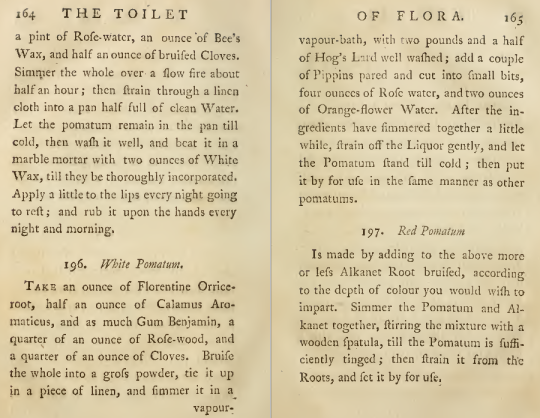
Yes, this is true. Pomatum AND hair powder (which was also very highly scented) were non-gendered– everyone used the same stuff. I don’t know what recipe they use at Williamsburg, but here is a recipe for one that contains apples:

image

As for smelling bad… Bathing was somewhat a matter of personal preference and affordability. A full bath required a lot of water to be drawn and heated, so enjoying a daily bath in your own home was a rare luxury that only a few, mostly slave owners, would indulge in. Others came up with ingenious ways to take daily baths, such as the guy who figured out how to rig up a shower by pulling a lever, and the guy who could afford to have water piped into a bathtub. Other people with access to a river or lake enjoyed swimming every day. In Europe, public baths WERE a thing. I am not sure how many of these operated in America. Regardless, people kept clean. To quote Orange is the New Black, they washed “tits, pits, and bits” every day, whether they lived in America or Europe.

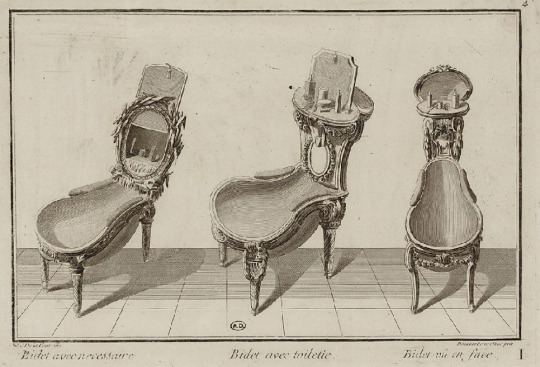
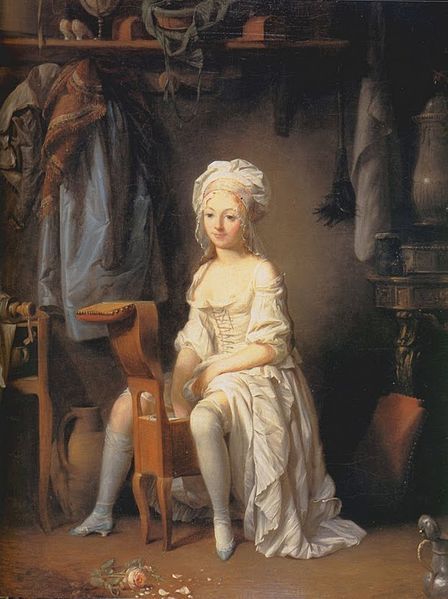
In Europe, people used these early bidets to attend to the most relevant personal hygiene:

image
image
image

Did they have deodorant? No. But in reality, people don’t smell that bad if they wash the relevant parts at the end of the day. Fresh sweat doesn’t smell. It’s bacteria that grows in old sweat that stinks, and as long as you keep your sweatiest parts clean, you won’t smell that bad. 

Mind you, contemporary Americans are ridiculous. They think that unless you literally reek of chemicals, if you have the slightest trace of natural human scent, that you stink. That’s our problem. We need to get over it.

Also, part of the hygiene standards of the time involved wearing fresh linen or cottonundergarments, which were changed daily.

In a scientific/historical experiment, a man tried it. He stopped bathing for about a month, but wore clothes comparable to those worn in the eighteenth century and earlier, changing into clean linens (linens being the garments that touched the skin, including both undershirt and underpants) every day. As long as he kept to this routine, he did not smell (this was confirmed by other people he interacted with who were adhering to modern hygiene standards at the time).

Further more, they discovered that when he bathed after adhering to the ‘change your linens’ routine for over a month, bathing caused him to reek. Really stink. It is theorized that this is because it threw off his natural ‘skin/scent rythems’.

Sorry for not providing sources.

Are you thinking of this article, about a historian who replicated personal hygiene practices of the Tudor era? 

People have a lot of misconceptions about hygiene prior to the contemporary era. It’s true that daily immersion bathing was less common from the Middle Ages through the Early Modern era, but that doesn’t mean people were filthy and stinky all the time. People washed, and had other ways of cleaning themselves (such as vigorous rubbing with a linen towel). Sponge baths are just as effective as immersion baths. In the Middle Ages, public bath houses were very popular, and not only for the very rich.

Here’s an article about bathing in colonial America. People used toothbrushes in the eighteenth century and, by the end of the century, included mildly abrasive powders to clean teeth more thoroughly (I saw interesting recipes for tooth powders in a cookbook the other week). 

There is no doubt that frequent bathing disrupts the skin’s natural microbiome. Because for so long we’ve assumed that bacteria=bad, frequent cleaning with harsh soap=good, we haven’t learned enough about the natural ecology of human skin. How many dermatological problems are the result of destroying the microbiome? How much body odor is the result of the same? There’s some research on this but nothing definitive. Doesn’t stop people from trying to market products though, and this writer for the New York Times did an experiment with one of them

Soap and shampoo-free washing got trendy after BoingBoing picked up on this post. And here’s a Reddit thread about a household that has been showering with water only– no soap or shampoo.

In short, we overestimate what it takes to stay clean, reasonably fresh-smelling (i.e. like a clean human, not stinky artificial scents), and to keep the skin healthy. In fact, our obsession with cleanliness and smell might be doing some harm to our skin.

The realities – not the “everybody knows” – of period hygiene is fascinating; it’s useful research for a writer and goes into the same file as “knights in armour couldn’t get up when they fell and got onto horses with cranes”; “medieval European swords were blunt iron clubs and too heavy for modern people to lift” and so on…

We Finally Know How Birds Can See Earth’s Magnetic Field

nanonaturalist:

myfrogcroaked:

A special eye protein is helping birds to “see” Earth’s magnetic field! If that’s not cool, I don’t know what is.

The ability to see Earth’s magnetic field, known as magnetoreception, relies on the presence of specifically the blue wavelength of light. The complex process involves “radical” intermediate molecules which are sensitive to Earth’s magnetic field. The Earth’s magnetic field, as it relates to the direction the bird is facing, could alter the intermediate radical molecules differently, giving the bird a sense for where it is facing in relation to the Earth’s magnetic field.

While the exact way birds visualize Earth’s magnetic field is part of further investigation, scientists believe the Cry4 protein acts as sort of a filter over the bird’s vision. This filter would allow birds to see a sort of compass of the Earth and direct their migratory flights accordingly.

Source: Forbes

!

We Finally Know How Birds Can See Earth’s Magnetic Field

elodieunderglass:

kounttrapula:

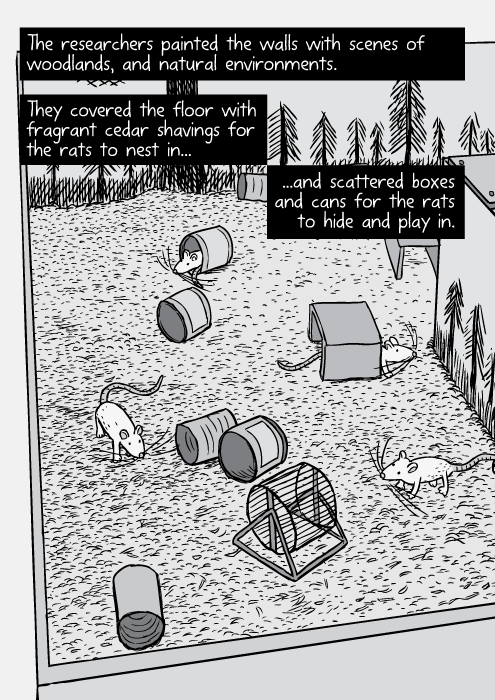
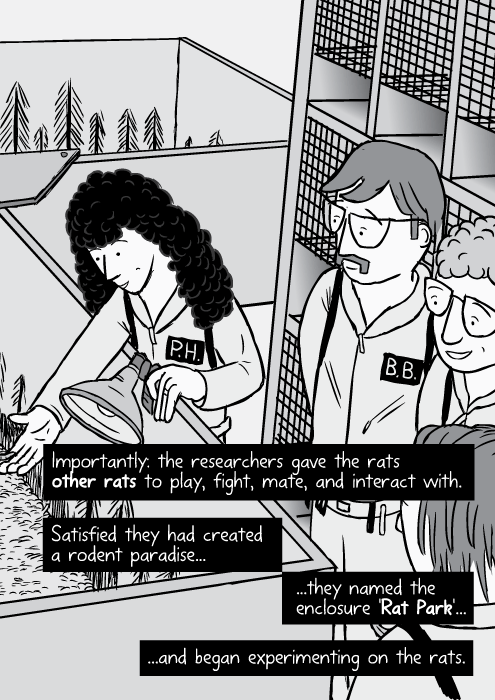
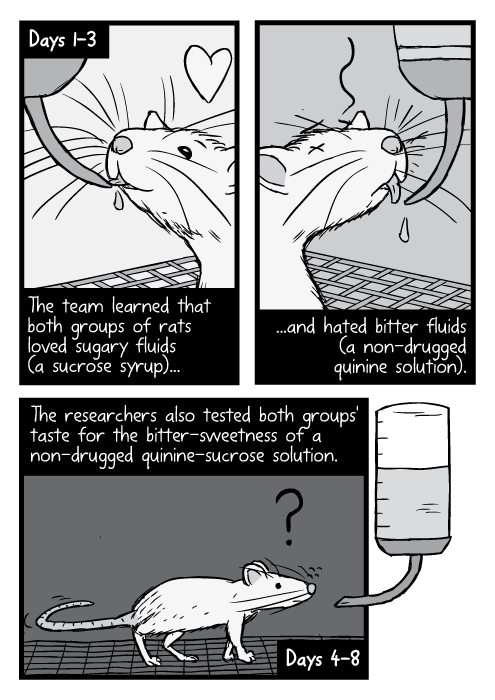
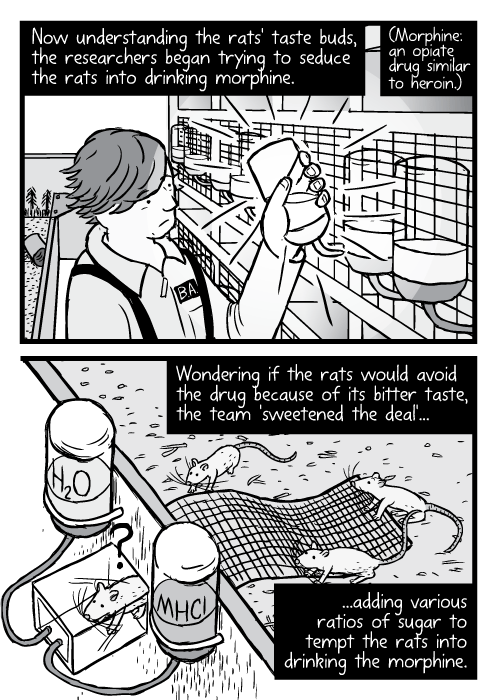
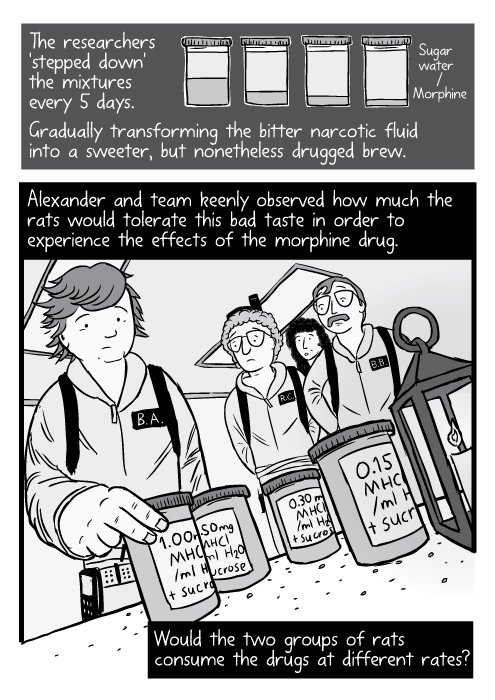
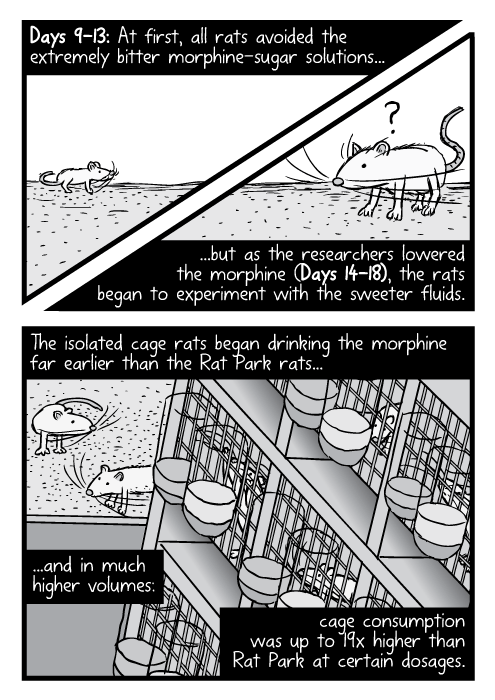
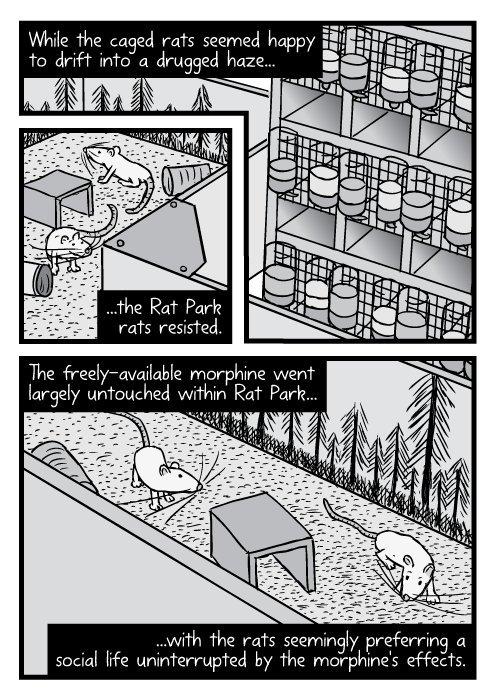
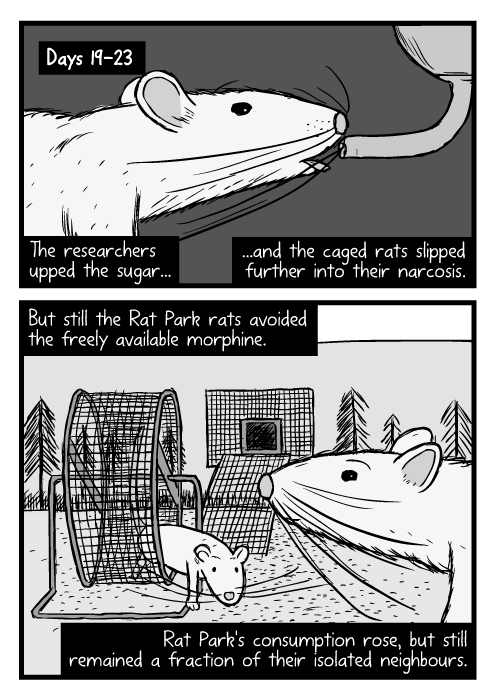
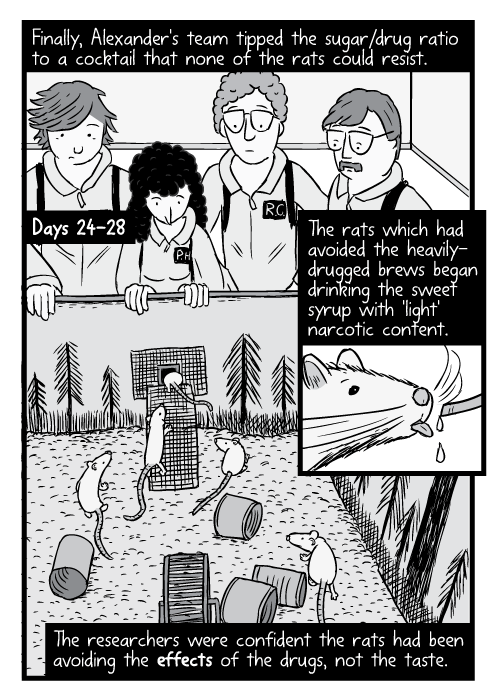
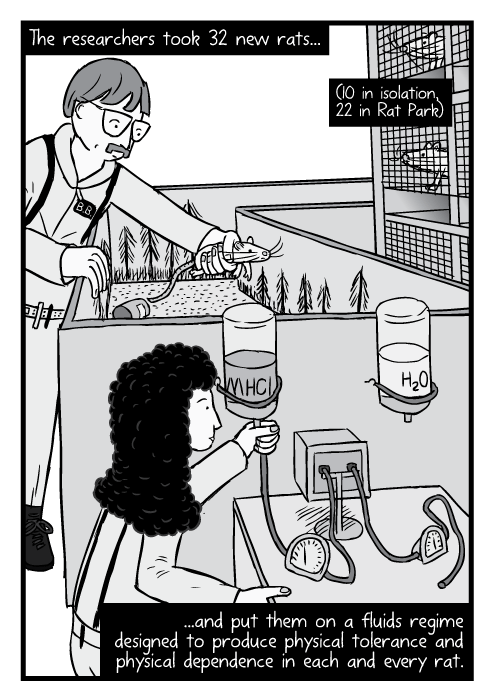
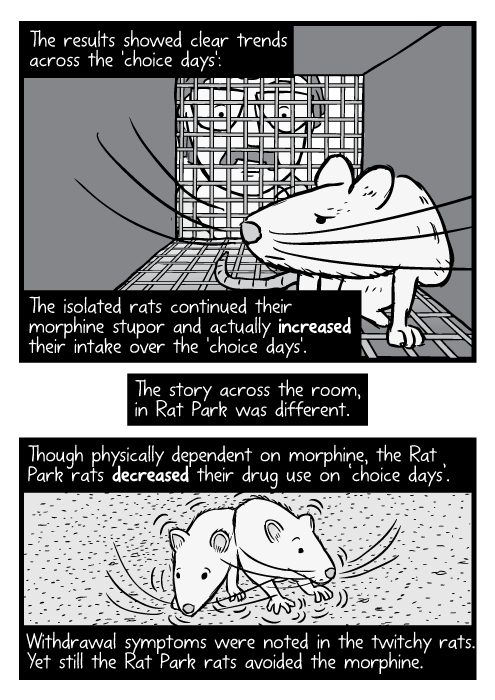
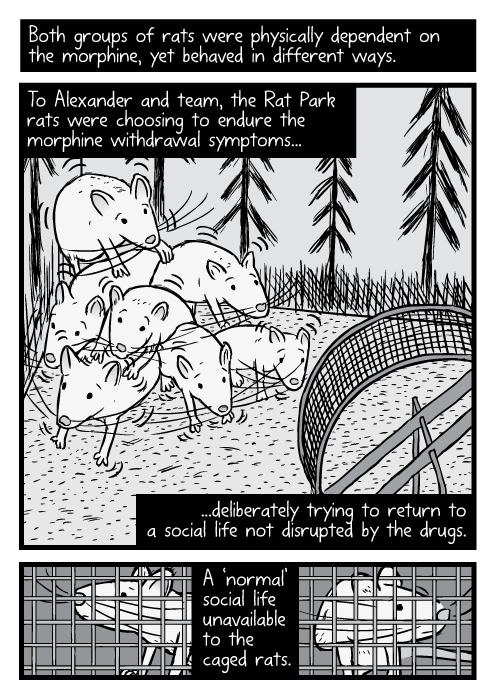
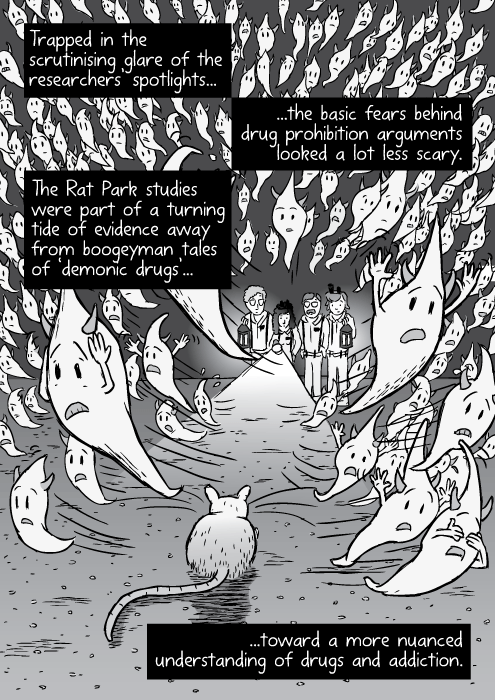
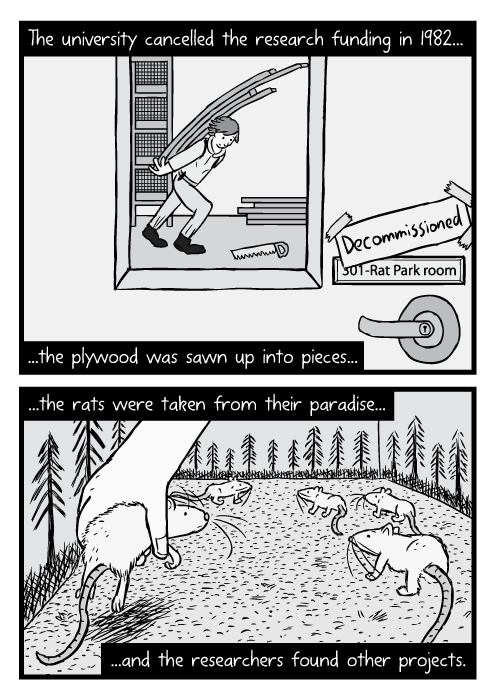
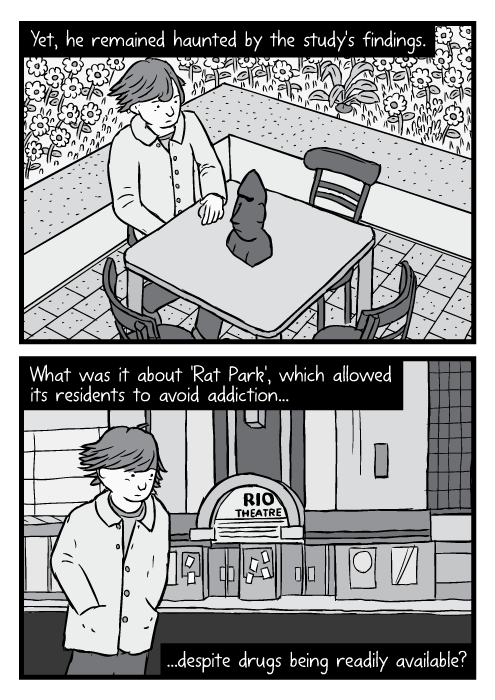
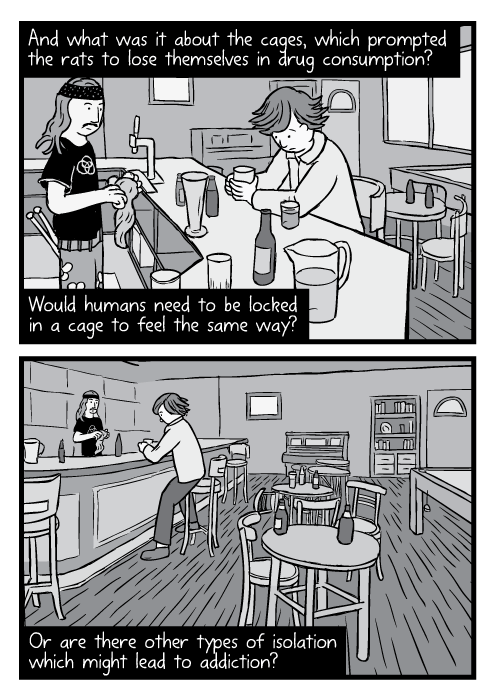
‘Rat Park’ –Stuart McMillen

You’ll never think about drug addiction the same way again after reading this comic.

What I found absolutely impressive and stunning about this comic is the way the artist explained the identification and elimination of the confounding factors in the Rat Park study. This is one of the hardest parts of experiments to explain to the public, and I think it was just brilliantly done.

iopele:

fuzipenguin:

nautiluschambers:

tommyoliverblogs:

unbelievable-facts:

During WWI, the word “fuck” was used too often, it was considered noteworthy when someone didn’t use it. E.g., “Get your fucking rifles,” was considered routine, whereas “Get your rifles,” implied urgency and danger.

That’s basically how my daily language works

I had to fact check this one, and here’s a British Library source that corroborates it.

Kinda how I view Ratchet in surgery. If he’s cursing, things’ll be ok. If he’s quiet, things are bad… 

that’s pretty much how human surgeons work too

weirwoodforest:

jamsker:

peterfromtexas:

Born to be wild

The lady on the scooter was an artist named Szabó Éva (sadly she passed away 4 years ago). She decorated the scooter herself, and as far as I know she could have embroidered the dress herself too, as she was absolutely skilled at the craft and often gave away tapestries to churches.  

She worked on cars too (as well as easter eggs, besides teaching folk dance):

image
image
image

She learned the art of Kalocsa patterns from her mother and she believed in keeping the folk motifs alive so passionately that she reportedly told she’d paint an entire house or airplane kalocsai if anyone asked her.

@mistressoffear @frogspears @anidlebrain

nubbsgalore:

known informally as asperatus clouds, this atmospheric phenomenon gets its name from the latin aspero, which roman poets used to describe the sea as it was roughened by the cold north wind. 

though the cause of their formation remains unknown, it is likely that the undulating and lumpy underside is a result of warmer, moister air from above and colder, dryer air from below meeting at the boundary between the lower and middle atmosphere.

when high level wind passes over rolling terrain, you get the same wavy effect as on the surface of water. but despite their ominous appearance, asperatus clouds tend to dissipate without a storm forming.

photos by (click pic) ken prior and allan gathman in perthshire, scotland; bryan and cherry alexander in qaanaaq, greenland; ti cranium in ohio; robert lurie in cape town, south africa; witta priester in new zealand; jesse klein in wisconsin

Stunning photos of ‘Caramel Curves,’ the all-female motorcycle club that rules the streets of New Orleans

lagonegirl:

Founded in 2005, the all-female motorcycle club meets every Sunday to cruise through the streets of New Orleans and share in the sisterhood of partaking in what is often a male-dominated arena.

“The motorcycle and MC [motorcycle club] world is very male-dominated, so to be African American and be a woman involved in this predominantly male world was also really fascinating.”

the contrast between their glamorous looks and gritty bikes sets them apart from other riders.

“Watching them dressed so feminine, and then being on these really masculine machines and being able to control them and do tricks on them, is visually stunning,” she said.

That is so damn badass! I’m in love!!!!!!

i’m obsessed with the idea of all black girl gangs.

Black women helping, fighting for and supporting other black women is what we need.

#BlackGirlsMagic

Stunning photos of ‘Caramel Curves,’ the all-female motorcycle club that rules the streets of New Orleans

schweizercomics:

Last year I did a few write-ups and drawings about some lady fighters from history who fought openly as their gender (there are plenty of disguised-as-a-man soldiers and plenty of trans soldiers, but those are outside the scope of this series).  This is by no means an exhaustive list; there were plenty of great figures that my schedule didn’t permit me to tackle (at least not yet).  But as Women’s History Month gets started tomorrow, I thought y’all might enjoy reading about some of history’s toughest broads.

ladygolem:

thok-ast-thok:

blacksquares:

In the next several years, the United States Depart­ment of Energy (DOE) will bury some 500,000 barrels of radioactive waste a third of a mile be­neath New Mexico’s shifting sand desert, in a geophysical-inert thick salt formation. The waste will remain dangerous for 10,000 years.

DOE wants to make a permanent warning at this burial site of its dangers, to help prevent inadvertent release of radioactivity into our descendant’s food chain, water supply, and air. The warning must endure, be found and un­der­stood.

There is no guaran­tee of U.S. gov­ernmen­tal control 100 years past intern­ment. No built plac­es have lasted for 10,000 years.

[…]

THE SEVEN TEST DESIGNS

1. Landscape of Thorns

A random forest of concrete thorns or oddly shaped claws, 50 feet high, the shapes of which suggest punctures, wounding of the body. These thorns all rise up from below and reach out like an uncon­trolled growth of something dangerous‑-perhaps mutations.

2. Menacing Earthworks

Immense lightning-shaped earthworks radiating from an open-centered Keep‑-emanations of danger seen best from the air, or from vantage points on top of the highest, 70-feet earthworks. At ground level, these massive earthworks crowd in, cutting off the horizon and making a loss of place. The square sandy Keep is vast and desolate, except for a walk-on map locating the many other radioactive waste sites in the world.

3. Black Hole

A dark masonry slab, evoking an enormous “black hole;” an immense no-thing; a void; land removed from use; worthless. Uninhabitable, and often ex­ceedingly hot because its blackness absorbs the sun’s heat and re-radiates it. The slab’s many joints have an irregular pattern, like the cracks in parched land.

4. Spikes Bursting Through Grid

A regular grid, about house-sized, inlaid in a ma­sonry slab that covers the Keep. The heavy, order­ing lid cannot stop the wounding energy from burst­ing up from below. The spikes/teeth/barbs first ripple in the Keep’s cover, then deform it, then puncture it; finally, the grid’s reliable and hu­man-imposed order is de­stroyed by a more power­ful force‑-chaos.

5. Rubble Landscape

Under the sand is a layer of stone. Its square outer rim is dynamited into boulders and bulldozed into a crude pile over the Keep, a cover different in height, material and vegeta­tion from the surround­ing desert. This rubble is an effort to keep some­thing dangerous in its lair‑-an inhospita­ble place that feels destroyed rather than created.

6. Forbidding Blocks

The stone under the sand is dyna­mit­ed and cast into black, house-sized, con­crete-and-stone blocks set in a deliberately irregular square grid, with a five-foot-wide “street” run­ning both ways. These streets go nowhere and are hot, omi­nous, and too nar­row to live or meet in. The scheme is a mas­sive effort to deny use. The land­scape is crudely or­dered, forbidding and uninhabit­able.

7. Spike Field

Stone spikes pierce the sand, pro­jecting from the Keep, uncon­trolled and cha­otic. The area is walled, with the spikes imprisoned and the outside safe.

– Michael Brill, art by Safdar Abidi

Ok but if you show me any of these I’m going in and exploring

that’s kinda the main problem they had with the project and why it hasnt been worked on in like twenty years

the ultimate human paradox of “the more you try to make it look unwelcoming, the cooler it looks and the more people will naturally want to check it out”